MODEL HISTORY
Following the ban of Group B in 1986, Toyota lacked a suitable successor for Group A. As a short time solution, they deployed the Supra model, but it was not an ideal choice. In 1988, the Celica GT-FOUR ST165 was introduced, becoming Toyota's first 4x4 rally car with. Its debut competition was the 1988 Tour de Corse (Corsica Rally). Juha Kankkunen was running in 5th place before his engine failed, while his teammate Kenneth Eriksson managed to finish in 6th place. Alongside its speed, the new car also revealed several technical problems. The vehicle utilized an X-Trac transmission with a hydraulically controlled center differential, allowing the power distribution between the axles to be adjusted directly from the cockpit. While this system was ahead of its time, it was also highly delicate and unreliable. The second major issue was insufficient engine cooling. Since the hood lacked any vents for heat dissipation, extracting hot air effectively proved impossible, causing the engine to overheat during rallies with higher ambient temperatures. Mechanics searched for every possible loophole to bring the necessary airflow under the hood. They experimented with relocating the turn signals, driving with the pop-up headlights raised, propping open the hood, using a light bar to redirect airflow, and even creating a specially shaped oil sump. It wasn't until the end of the 1988 season at the RAC Rally that Björn Waldegård managed to bring the Celica to the finish in 3rd place. Greater success followed in the 1989 season, culminating at the Rally Australia, where Toyota secured a 1-2 finish with the Kankkunen/Piironen crew winning, followed by the Eriksson/Parmander crew. That year, Kankkunen finished 3rd in the overall drivers' championship. Toyota thus finally began to compete with Lancia, which had been dominant until then. By the 1990 season, Toyotas were regularly appearing on the podium. Victory came as early as the third round at the demanding Safari Rally, won by Björn Waldegård, with his teammate Eriksson finishing 3rd. However, the rest of the season was dominated by Carlos Sainz, who managed to win 4 rallies, retired only once, and finished 4th once—otherwise placing on the podium every time. This earned him the 1990 World Championship title and brought an end to Lancia's winning streak. The 1991 season started on a winning note for Toyota again, with Sainz winning 5 rallies, but an outstanding performance by Kankkunen ultimately meant a tight victory for Lancia in both the manufacturers' and drivers' championships. For 1992, Toyota entered the battlefield with a new model, the Celica ST185.
OUR CAR
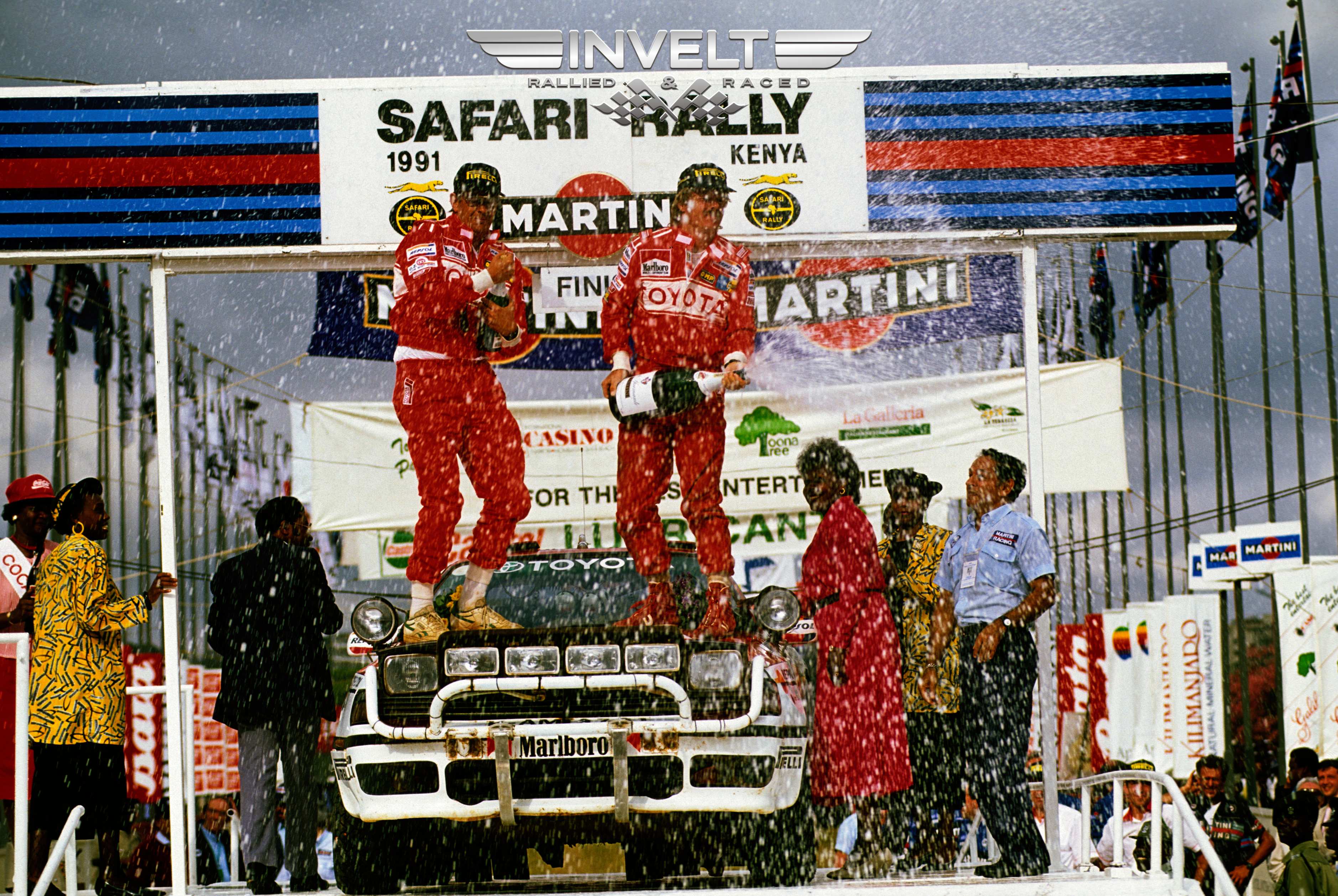
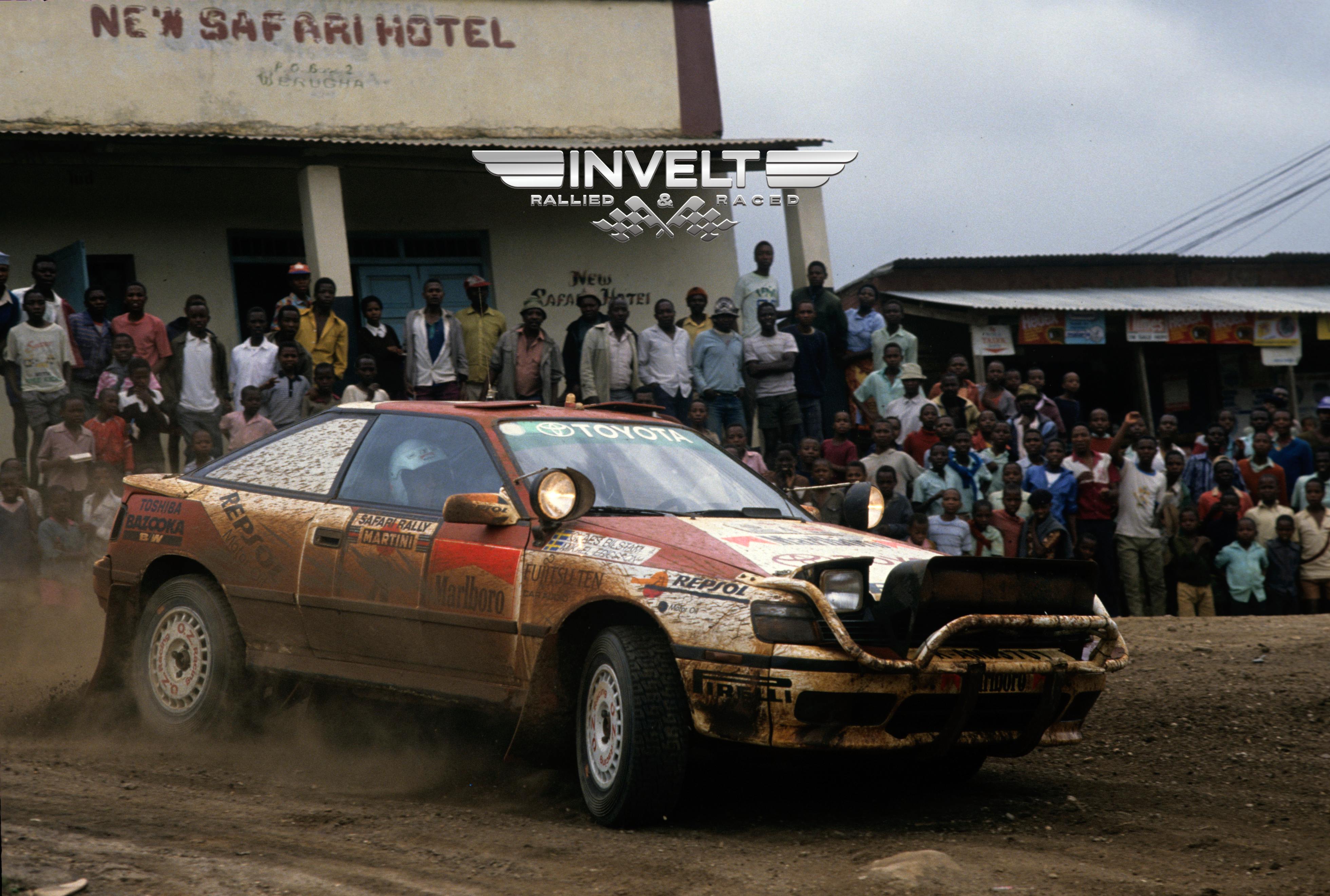
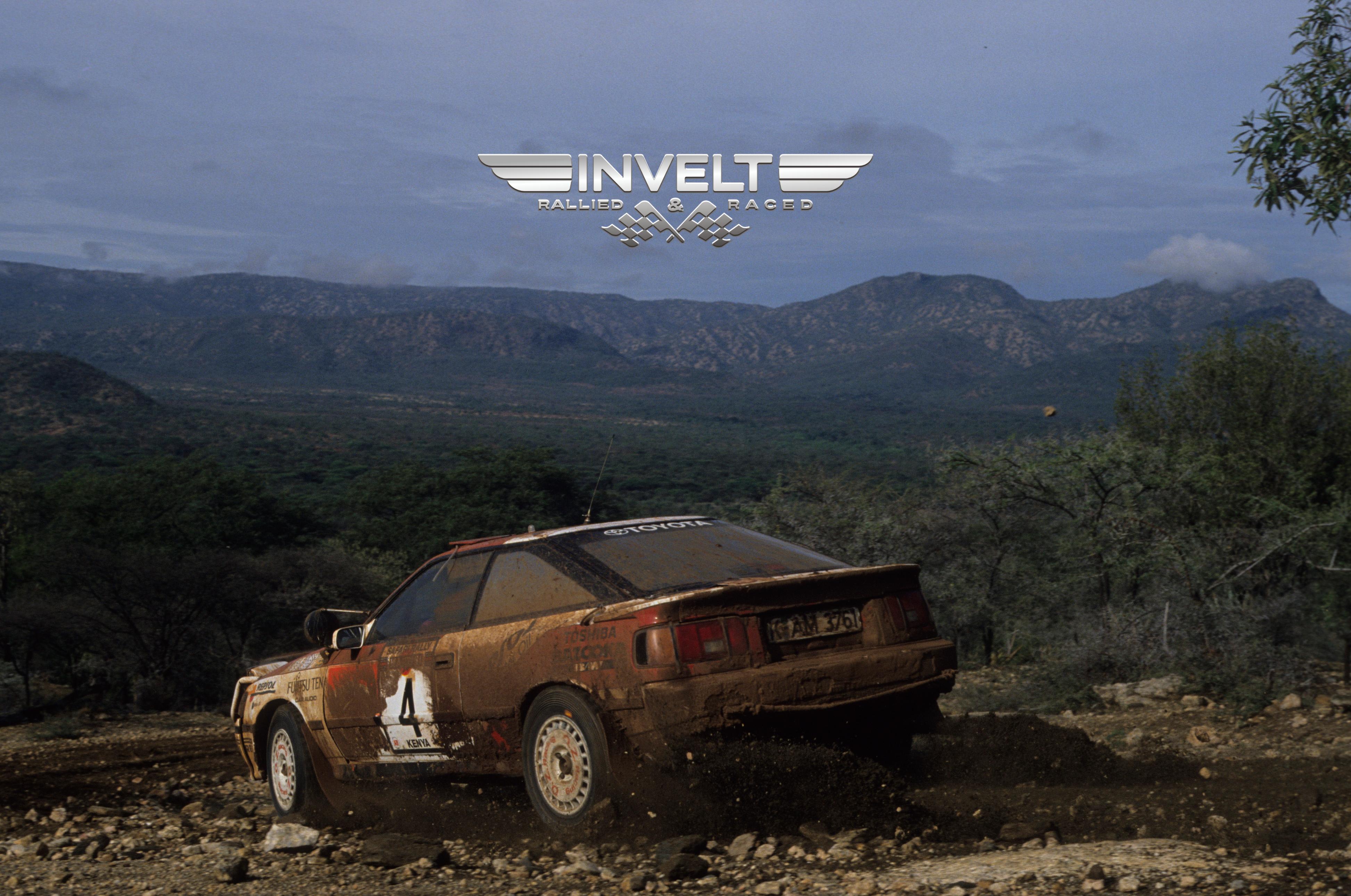
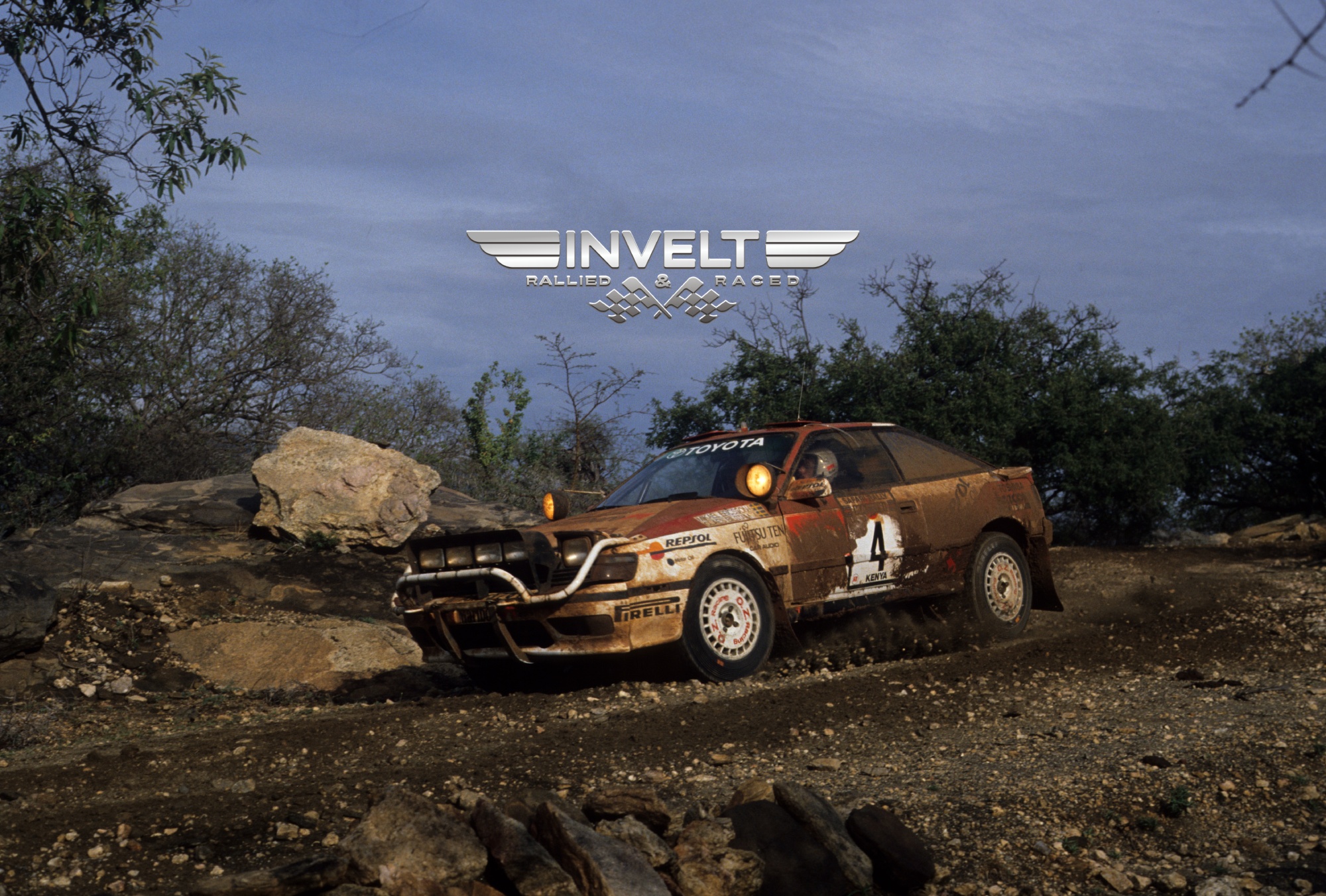
Our Celica, with the license plate K-AM 3761, was built for the 1991 Safari Rally for driver Mikael Ericsson. He drove it for nearly 4,500 kilometers across demanding African tracks. He finished the race in 2nd place overall, behind Kankkunen's Lancia, making it the best result among all Toyotas in that event. In March 1992, the car was sold to Jonathan Toroitich in Kenya. The vehicle remained in Africa the entire time, and as late as 1999, Moses Lumala won the Ugandan championship title with it. It wasn't until after 2005 that the car made its way to Europe, where it changed hands several times until it arrived at our Invelt facilities in 2022. The car was in the exact condition in which it had finished its last race in Africa. In our workshops, it underwent a sensitive restoration to return it to the original specification in which it tackled the 1991 Safari Rally.